Stephen Minot Weld Jr.
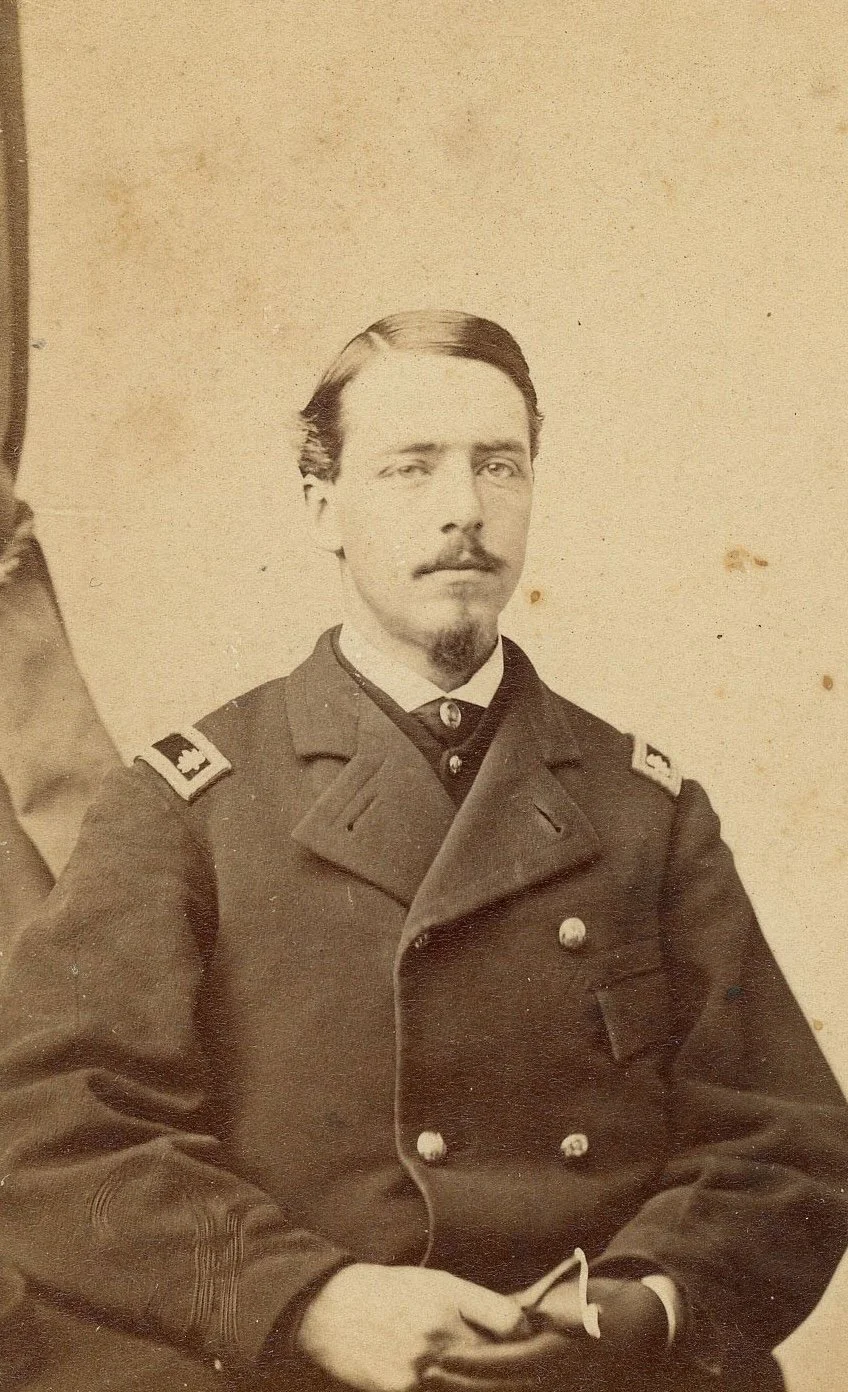
Stephen Minot Weld Jr. courtesy of Greg French
Stephen Minot Weld Jr. (January 4, 1842 – March 16, 1920) stands as a striking example of a 19th-century American whose life bridged war, commerce, and cultivated leisure. Born into the powerful Boston-based Weld family, he inherited a legacy of wealth, education, and social influence, yet his own life was far from a simple continuation of inherited privilege. Instead, Weld’s story is one of personal ambition shaped by the upheaval of the American Civil War, followed by resilience in business and a later-life devotion to horticulture that reflected both aesthetic sensibility and elite cultural values.
Weld was born in Jamaica Plain, Massachusetts, the son of Stephen Minot Weld, a respected schoolmaster and political figure. His early education took place under his father’s guidance at a boarding school that prepared young men for Harvard. He went on to attend Harvard College, graduating in 1860, and briefly entered Harvard Law School. His upbringing reflected the disciplined ethos of Boston’s Brahmin class, emphasizing restraint, education, and civic duty. Weld himself later recalled abstaining from alcohol and tobacco throughout most of his college years, underscoring the moral rigor of his environment.
The outbreak of the American Civil War dramatically altered the trajectory of his life. Like many young men of his generation, Weld left his studies to join the Union Army. At only nineteen, he was commissioned as a second lieutenant in the 18th Massachusetts Infantry Regiment in 1862. His military career quickly became distinguished by both bravery and rapid advancement. He fought in major engagements, including the Second Battle of Bull Run, the Battle of Antietam, and the Battle of Gettysburg. These battles were among the most consequential of the war, and Weld’s participation placed him at the center of the Union Army’s most intense campaigns.
Weld’s wartime experience was marked by hardship and personal danger. He was captured twice by Confederate forces and later exchanged, a not uncommon but perilous experience for officers. He also endured combat injuries and narrowly escaped death on multiple occasions, including an incident in which a bullet pierced his boot and another in which his horse was shot from beneath him. His leadership abilities were recognized with a series of promotions: first to captain, then to lieutenant colonel, and eventually to colonel of the 56th Massachusetts Regiment. By the war’s end in 1865, he had earned a brevet promotion to brigadier general at the remarkably young age of twenty-three, a distinction that cemented his lifelong nickname, “the General.”
Despite his distinguished service, Weld’s perspective on the war reflected the conservative attitudes of his social class. Like many elite Northerners, he viewed the conflict primarily as a struggle to preserve the Union rather than as a moral crusade against slavery. He was known to be critical of abolitionist figures such as Charles Sumner, and his writings suggest a limited sympathy for the plight of enslaved people. This stance illustrates the complexity of Civil War motivations among Union officers, particularly those from established New England families.
Following the war, Weld’s life entered a period of instability that contrasted sharply with his earlier success. The sudden death of his father in 1867 disrupted family finances and responsibilities. Weld soon faced a series of business failures, including the collapse of a felting mill in which he had invested and the flooding that destroyed a cotton mill. These setbacks left him deeply in debt and forced him to rebuild his financial standing from the ground up. Unlike many members of his social class, who relied on inherited wealth, Weld had to engage directly with the uncertainties of postwar industrial capitalism.
He eventually found success as a cotton broker, founding the firm S. M. Weld & Company in Boston. Through persistence and strategic expansion, he transformed the business into a profitable enterprise with international reach, including branches in India and Japan. Even a major embezzlement by a trusted associate that resulted in significant financial loss did not permanently derail his progress. By the late 19th century, Weld had regained and surpassed his earlier wealth, becoming once again a prominent figure in Boston’s business community. His career reflects the broader economic transformations of the Gilded Age, during which traditional elites adapted to new forms of global commerce and finance.
In his later years, Weld devoted increasing attention to horticulture, an interest that combined scientific curiosity with aesthetic ambition. He became president of the Massachusetts Horticultural Society in 1906 and helped support the development of the Arnold Arboretum alongside figures such as Charles Sprague Sargent. His most notable contribution to horticulture, however, was his private estate, Rockweld, in Dedham, Massachusetts. This expansive property featured elaborate rock gardens, greenhouses, and a wide variety of plant species collected from around the world. Designed in part with input from Frederick Law Olmsted, the estate represented one of the finest examples of private landscape design in the United States at the time.
Rockweld was more than a personal retreat; it was an expression of Weld’s identity and values. The estate included a mansion situated on a hill overlooking the Charles River valley, surrounded by carefully arranged natural features, including ponds, woodlands, and stone formations. At its peak, it contained hundreds of plant varieties and employed multiple gardeners to maintain its grounds. After Weld’s death, the estate was eventually transformed, but its legacy endures as part of the broader history of American landscape architecture.
Weld also developed another significant property at Indian Neck near Cape Cod, where he created a coastal compound that combined recreation with community building. There he established gardens, built a private golf course, and constructed several homes for family and friends. This enclave reflected a distinctly New England pattern of elite social organization, in which extended families maintained seasonal communities that reinforced shared values and social ties. Over time, the property became a multigenerational family center, illustrating the enduring influence of the Weld lineage.
His personal life was marked by both family continuity and tragedy. In 1869, he married Eloise Rodman, with whom he had seven children. Several of these children died young, including one who drowned and others who succumbed to illness. After Eloise’s death in 1898, Weld remarried in 1904 to Susan Edith Waterbury, who had previously been a governess to his children. Despite personal losses, his descendants continued to play roles in American society, and his extended family includes notable figures such as Tuesday Weld and Bill Weld.
Stephen Minot Weld Jr. died in 1920 in Boca Grande, Florida. His funeral reflected his military legacy, marked by the sounding of taps in honor of his Civil War service. By the time of his death, he had lived through and contributed to some of the most transformative developments in American history, from the Civil War to the rise of global commerce and the cultural refinement of the Gilded Age elite.
Weld’s life encapsulates the contradictions and possibilities of his era. He was at once a traditional aristocrat and a self-made businessman, a soldier who fought for the Union but not primarily for emancipation, and a capitalist who ultimately devoted himself to the cultivation of beauty in nature. His legacy lies not only in his military record or financial success but also in the landscapes he shaped and the social world he helped sustain. Through these varied pursuits, Stephen Minot Weld Jr. emerges as a figure who both embodied and helped define the values of his time.
Created with Perplexity and fact-checked by JPHS.
Sources
“Stephen Minot Weld Jr.” Wikipedia. Last modified 2025.
“Stephen Minot Weld.” Wikipedia. Last modified 2025.
Lambert, Craig A. “The Welds of Harvard Yard.” Harvard Magazine, November–December 1998.
“The Call of the Weld: Five Generations of Descendants of Stephen Minot Weld, Jr.” Google Books, 1999.
“Weld Family.” Wikipedia. Last modified 2026.
“Weld Family — Jamaica Plain Historical Society.”